Sunday, September 2, 2012

Class of Stars!

This is my first year of teaching and I sometimes feel in over my head. During this Labor Day weekend, it made me really happy to run across blogs that are teaching similar programs as my school. Programs such as: Daily 5, Everyday Counts and Writers Workshop. I was floored! When you get a chance, look to the blogs at the right. They have tons of ideas!
In my classroom, our theme for the year is "Reach for the Stars". I hope to inspire my firsties to do their best and reach their goals. To help with that, I have created a variety of themed ideas for the year.
Shooting Star Work
This board will give students a chance to show their best work. That way everyone can see it and they will feel accomplished. 
Famous Birthday Stars
When we have a birthday, students will get to wear nifty sunglasses (I found them at the dollar store) all day long. The sunglasses have different light-colored lenses so I can still see their eyes when I'm teaching. We will also ask them some questions about them to share with the class.
"Star Spots"
I told my class that we are all going to be stars this year, but only stars get to sit on a star spot at the mat. ;) Then everyone immediately straightened up... It was just organization for me. They were squishing each over and over with no real lines. So I made stars on the computer, cut them out and laminated them. I then put them on my mat in an organized fashion. Students have to sit on the star and not play with it. Lol. I can get their attention pretty quick when I ask, "Where are all my stars?" Once I have everyone's attention at the mat, I then say, "Oh! There's my stars!"
STAR Behavior
This is a management strategy similar to our school-wide strategy "Give Me High 5!". For STAR Behavior to work, students have to:
Sit up straight
Tongues still (voices off)
Attention on me
Ready to Learn!
When I ask for it, students are really good at showing me 'STAR Behavior'.

So far, that's all I have thought up, but I'm sure I'll have more as the year continues.

Thursday, December 9, 2010

Batik fabric design!

Last time, we finished up with our last project: Batik(s). They looked pretty cool. Only sad part is that they kind of bled a little when we went to rinse them out. With mine, you miss the bottom part of the treeline (either my lines were too thin or it was dry enough for paint application, but it's kinda there. I decided to do a tree as my repeating pattern using only organic lines-short or long. It looks kinda cool actually. I like it. I kinda wished I used deeper cool colors for more of a contrast but oh well.


Thursday, December 2, 2010

More updates...

I forgot to add a few other assignments.. :)


We did Google sketch-ups, creating a building that has a columns. It was harder than I thought it was. But it was still fun. Those in graphic design have my utmost respect for the time and talent they put into their creations. Here's what my building looked like. The dome is a happy accident. Unfortunately, I struggled in trying to recreate it on the other side. So.. there's only a half dome. I don't know what this building would be used for, but I had fun creating it.


This assignment was done before our watercolor resist paintings. We were testing the elements (sorta). We would taste a piece of food and then with line, shape and color had to paint what it tasted like in a square that was sectioned off with tape (8 squares per page). We were experimenting with watercolor at the same time so we did different things like: wet-on-wet, wet-on-dry, use of different salts, use of saran wrap, and splattering. It was kind of fun. Can you guess what square is what food? You have the options of: sour patch watermelon, sour gummy worm, fudge brownie, muddy buddies, chicken in a biscuit cracker, chips & salsa, peanut butter & jelly sandwich, and chocolate chip cookie

Monday, November 29, 2010

Updating Assignments...

It's been awhile since I've posted what we've done in class. So today, I'll give you the update...


This is a watercolor resist. We used oil pastel to create an image of our window at nightfall, much like Van Gogh's Starry Starry Night. After applying the pastels, we'd then scratch out parts for texture and leave some areas blank for the watercolor. This view can be seen from my bedroom window. It's quite pretty. I chose bold colors to represent the storage units, the wild grass and the mountains.


Above are stamps we created using yarn and glue. It was extremely messy and unfortunately for me ended up not even working on my clay pots. What a bummer!
Using simple 'original' hieroglyphs, I created stamps that represented me:
(Left) paint brush on canvas, (right) musical symbol; almost like treble clef, (center) HaHa--I enjoy laughing

Coil pot and spoon
We used 'magic' clay. It smelled funny and didn't work very well for smoothing and blending your pot. There's a few designs in it too. I had fun playing with it, but it's not something I'd use with my students


Our pots are finished!
We got them back from the kiln.
After learning about archaeology and pottery of the ancients. We made our own. First testing it out with our 'magic' clay, making stamps and then putting it into context with real clay. My pots represent inner beauty. The music symbol is in one and the 'haha' one is in the other. Since the 'haha' is underneath those gem things that you find in grandma's house it has the symbolic inference that sometime you have to look under the facade or troubling moments to find the happier parts of life. It can represent people too in similar context. Some things that may appear broken (like the crack in the bottom) can in reality be quite beautiful if given the chance.


Scratchboard!
I truly felt like a kid when creating this one. Not only did black specimen get everywhere when you scratched it, but it was quite enjoyable to discover the bursts of color underneath the black tempera mixture. Plus the fancy, funky-dory letters and the texture create a very fun and creative design that sends you to the center of the page.

What can you map from your life?
We we're asked to create a map that dealt with our city or neighborhood or anything really that related back to ourselves. I created a map of my apt complex with visual pictures of the the surroundings. I soaked my paper in coffee, pressed to dry, added ink and paint and then burned the edges. In places it got carried away or it didn't leave the burn mark I had hoped for, but it still turned out pretty cool.
My statement for this one is as follows: Sometimes all we get to life or a problem are basic pieces of a puzzle, unsure as to how they fit together or lead to our main solution. If we look at them from a different angle, we can see the whole picture and truly get the answers that we're looking for.


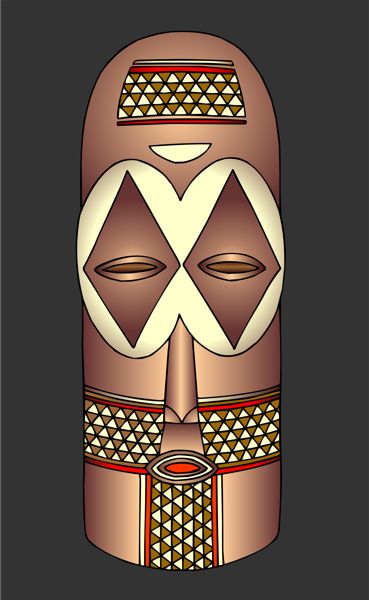
In my last post, I talked about African masks and what I'd discovered.
Well, above is my mimic African Mask.
It kind of reminds me of TRANSFORMERS for some reason.
Sometimes others may seem scary or intimidating. But you never know what you might find underneath if you just give them a chance. Everyday, people wear masks to hide, shade and create illusions of who they really are.


Our latest creation: Wire sculptures.
The trick with our sculptures, everyone was given a disability. I was and ESL student. Maele gave a few of us instructions in american sign language. It was confusing. The only words I got out of it was "cat", "painting" and "horse". So I made a cat pouncing on a mouse. The black thing in front is the mouse. You can kind of see the ears of the cat and his front paws from these two pictures. I randomly gave him a black tail, curvy back feet and a fat body.
It was a good experience. Those with disabilities have to work harder in a classroom to produce similar results as the other children without them. The question lies in how, as a teacher, you're going to accommodate your lesson for the students that need it.

Monday, November 15, 2010

African Masks

Today we're learning about african mask making for students using various household objects. Fortunately for us, we get to research it...
Although African Masks look really cool with their bold and abstract design, they were originally used as part of their ceremony costume. Different masks have different meanings. They were used for various ceremonies whether religious or social. Their masks represented the spirits of their ancestors uniting with the forces of nature in the community. When the mask was worn, it would come to life (kinda like the movie Mask with Jim Carrey) through the possession of the spirits in the performance of dance. A lot of the time the symbolism was related to nature or animals. This bond or relationship between man and the environment is highly valued in the African culture and has been represented throughout the ages of masks.

All of the masks would have symbolic meaning based on the design, line, color, texture and shapes

Thursday, November 4, 2010

Technology + Art Education = Benefits!!!

Reflection: Name 3-5 different ways you could use technology in art education. How would it be age-appropriate and teach a given art principle?

Technology has many possibilities or branches like Art. In my tech class last semester for my program, I learned about several ways to incorporate technology in my classroom. I'm sure that a lot of those ways could be reciprocated along with art education. Here are a few:
  • Google Sketch-Up (as we learned in class)
  • Blog
  • Smart Board
  • Photography
  • Podcasts
  • Video chat with modern artists
  • Powerpoint (mini lesson, multiple examples of artwork
  • Videos on famous artists (i.e. Van Gogh, Raphael, Picasso, Frida Kahlo, etc.)
  • Internet Search (look for pictures to use in art assignments)
  • Work alongside another teacher in a different city or state using video chat
  • As a class, create a digital video that looks professional (http://www.olejarz.com/arted/digitalvideo/index.html)
There are many more ways that teachers can incorporate technology in the classroom. I believe it's important to include technology in the classroom (no matter the subject) because as we progress as a society, we are relying more and more on technology, especially the next generation. We use technology in our everyday lives. It's going to be the language that our children will speak a lot more fluently as newer and more advanced technology comes out. We'll have to prove to them that we can speak that language, so as not to be 'old school' or 'archaic' teacher and be a 'modern' teacher instead. Harold Olejarz said "Using technology to demonstrate teaching and learning is the best way for educators to prove that they are using technology to enhance teaching and learning." Plus, by using technology in the classroom, I know that the students will be really enthusiastic about the inclusion. In our textbook, it says that electronic media has a lot of power in holding young peoples' attention. If that be the case, why not use it???
As for being age-appropriate, you'd have to look at their motor skills involving the technology. For example, 1st and 2nd graders are just barely learning how to type and maneuver on a computer. Where as 4th and 5th graders understand computers enough to create a basic powerpoint presentation and write a letter. Whether or not it's age-appropriate depends on the lesson. What do you want them to do and learn? How much skill does it require?
In some ways it would be a lot easier to teach principles of design using technology. In other ways it'd be harder. Having the option of technological use in the classroom opens up several possibilities and directions that you could take your class. Using computers for instance can help teach about line, shape, color, scale, texturize, etc. just at a click of a button (our text book). Everyday we are becoming more and more of a push-button society. Why not use it to our advantage?

Friday, October 29, 2010

Age Appropriateness

Hola!
This week we have to design or find an art lesson for a given age group and say why it's appropriate for that age group.

I found a lesson plan about Henry Rousseau and 'stained glass' windows. I tweaked it to meet the standards for the Utah State Core. This lesson plan is age appropriate because it matches up with the standards and objectives of the state core. It also uses the affective, cognitive and psychomotor skills developed at that age. They should be able to know how to use the oil pastels and the gel glue without making too much of a mess. I focused my lesson plan towards 4th graders. According to our textbook (p 210), 3rd-4th graders will typically:
  • Create space and depth by employing vertical placement, diminishing size, and overlapping shapes
  • Draw and compose with more conscious, deliberate planning and show more naturalistic/realistic proportions
  • Mix and experiment with an expanded range of colors, including tints and shades
  • Select and arrange objects to satisfy their compositional needs
All of these fit in well with my 4th grade lesson plan.
If you want a copy, just email me and I'll send it to you. I was going to have a link or something on my blog, but I'm not sure how to make it work. :S sorry