This is a watercolor resist. We used oil pastel to create an image of our window at nightfall, much like Van Gogh's Starry Starry Night. After applying the pastels, we'd then scratch out parts for texture and leave some areas blank for the watercolor. This view can be seen from my bedroom window. It's quite pretty. I chose bold colors to represent the storage units, the wild grass and the mountains.

Above are stamps we created using yarn and glue. It was extremely messy and unfortunately for me ended up not even working on my clay pots. What a bummer!
Using simple 'original' hieroglyphs, I created stamps that represented me:
(Left) paint brush on canvas, (right) musical symbol; almost like treble clef, (center) HaHa--I enjoy laughing
 Coil pot and spoon
We used 'magic' clay. It smelled funny and didn't work very well for smoothing and blending your pot. There's a few designs in it too. I had fun playing with it, but it's not something I'd use with my students

Our pots are finished!
We got them back from the kiln.
After learning about archaeology and pottery of the ancients. We made our own. First testing it out with our 'magic' clay, making stamps and then putting it into context with real clay. My pots represent inner beauty. The music symbol is in one and the 'haha' one is in the other. Since the 'haha' is underneath those gem things that you find in grandma's house it has the symbolic inference that sometime you have to look under the facade or troubling moments to find the happier parts of life. It can represent people too in similar context. Some things that may appear broken (like the crack in the bottom) can in reality be quite beautiful if given the chance.


Scratchboard!
I truly felt like a kid when creating this one. Not only did black specimen get everywhere when you scratched it, but it was quite enjoyable to discover the bursts of color underneath the black tempera mixture. Plus the fancy, funky-dory letters and the texture create a very fun and creative design that sends you to the center of the page.
 What can you map from your life?
We we're asked to create a map that dealt with our city or neighborhood or anything really that related back to ourselves. I created a map of my apt complex with visual pictures of the the surroundings. I soaked my paper in coffee, pressed to dry, added ink and paint and then burned the edges. In places it got carried away or it didn't leave the burn mark I had hoped for, but it still turned out pretty cool.
My statement for this one is as follows: Sometimes all we get to life or a problem are basic pieces of a puzzle, unsure as to how they fit together or lead to our main solution. If we look at them from a different angle, we can see the whole picture and truly get the answers that we're looking for.
My statement for this one is as follows: Sometimes all we get to life or a problem are basic pieces of a puzzle, unsure as to how they fit together or lead to our main solution. If we look at them from a different angle, we can see the whole picture and truly get the answers that we're looking for.

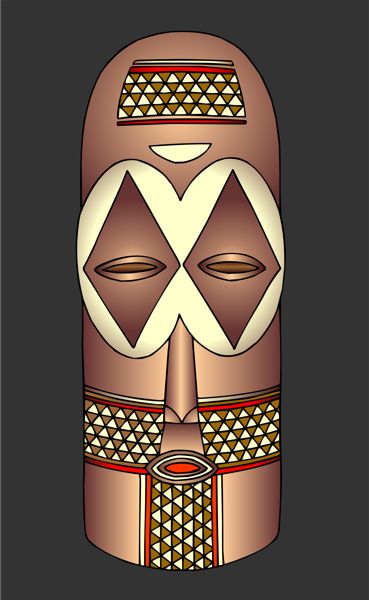
 In my last post, I talked about African masks and what I'd discovered.
Well, above is my mimic African Mask.
It kind of reminds me of TRANSFORMERS for some reason.
Sometimes others may seem scary or intimidating. But you never know what you might find underneath if you just give them a chance. Everyday, people wear masks to hide, shade and create illusions of who they really are.

 Our latest creation: Wire sculptures.
The trick with our sculptures, everyone was given a disability. I was and ESL student. Maele gave a few of us instructions in american sign language. It was confusing. The only words I got out of it was "cat", "painting" and "horse". So I made a cat pouncing on a mouse. The black thing in front is the mouse. You can kind of see the ears of the cat and his front paws from these two pictures. I randomly gave him a black tail, curvy back feet and a fat body.
It was a good experience. Those with disabilities have to work harder in a classroom to produce similar results as the other children without them. The question lies in how, as a teacher, you're going to accommodate your lesson for the students that need it.